
Tub-to-Shower Conversions in Connecticut
Timelines, Costs, Safety, and What Homeowners Should Know
Tub-to-shower conversions are one of the most requested bathroom upgrades across Connecticut, particularly in homes built from the 1950s through the 1990s. In many areas throughout Hartford County, New Haven County, Tolland County, Fairfield County, and shoreline communities, homeowners are replacing underused bathtubs with walk-in showers that better fit daily routines, safety needs, and long-term plans.
This guide explains how tub-to-shower conversions work in Connecticut homes, realistic timelines, material options, safety considerations, and what often impacts cost — without sales pressure.
On This Page
What Is a Tub-to-Shower Conversion?
Can Tub-to-Shower Conversions Be Done in 1–2 Days in Connecticut?
Acrylic vs Tile Showers for Connecticut Homes
Tub-to-Shower Conversions and Bathroom Safety
Aging-in-Place Considerations for Connecticut Homeowners
Typical Costs for Tub-to-Shower Conversions in Connecti
Common Mistakes to Avoid
Is a Tub-to-Shower Conversion Right for Your Home?
Final Guidance for Connecticut Homeowners
What Is a Tub-to-Shower Conversion?
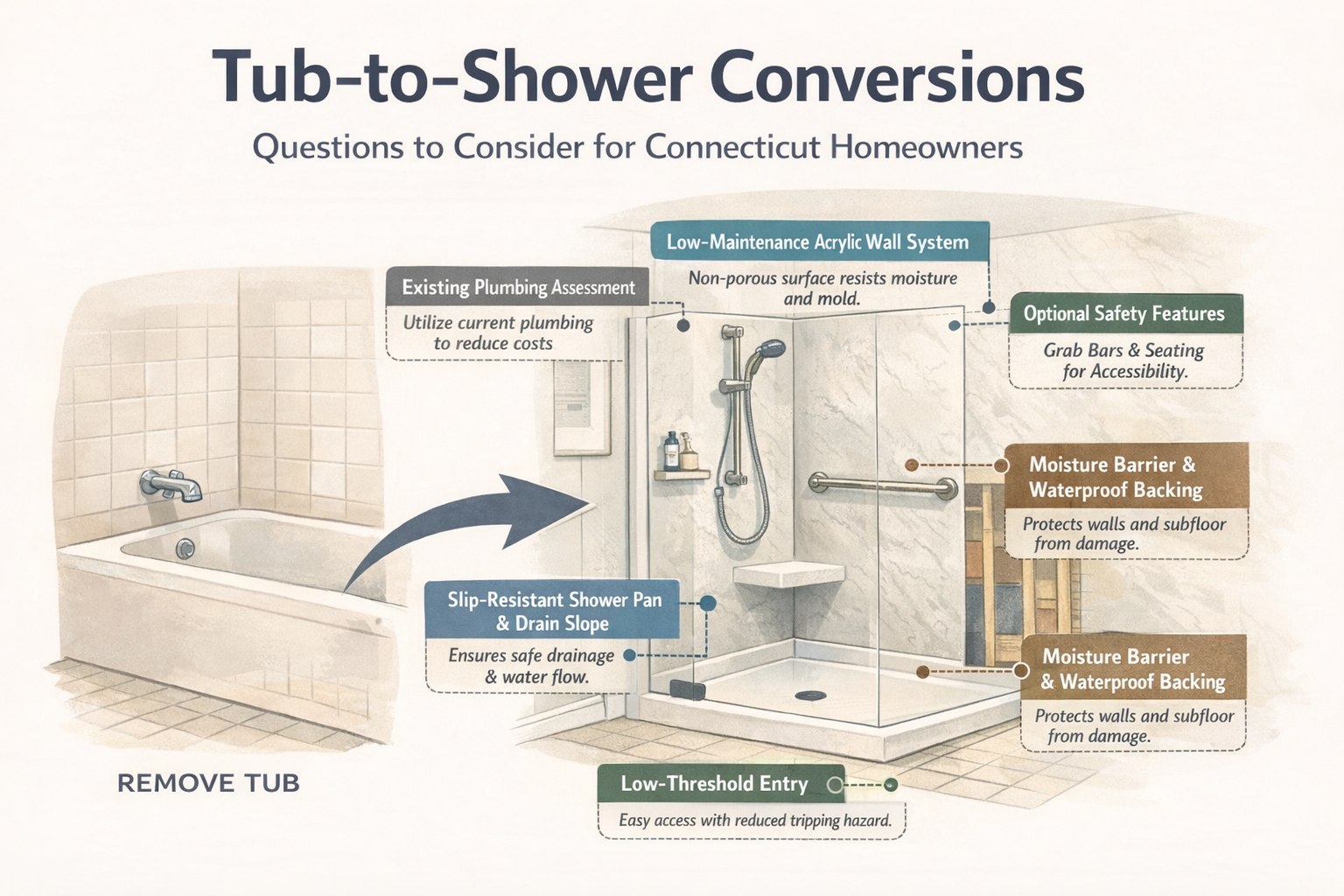
A tub-to-shower conversion removes an existing bathtub and replaces it with a walk-in shower, usually within the same footprint. Most Connecticut conversions include:
Removal and disposal of the tub
Installation of a shower base
New wall system (commonly acrylic or composite)
Updated plumbing fixtures
A shower enclosure or door
Because the layout typically remains unchanged, conversions are often far more efficient than full bathroom remodels.
Can Tub-to-Shower Conversions in Connecticut Be Done in 1–2 Days?
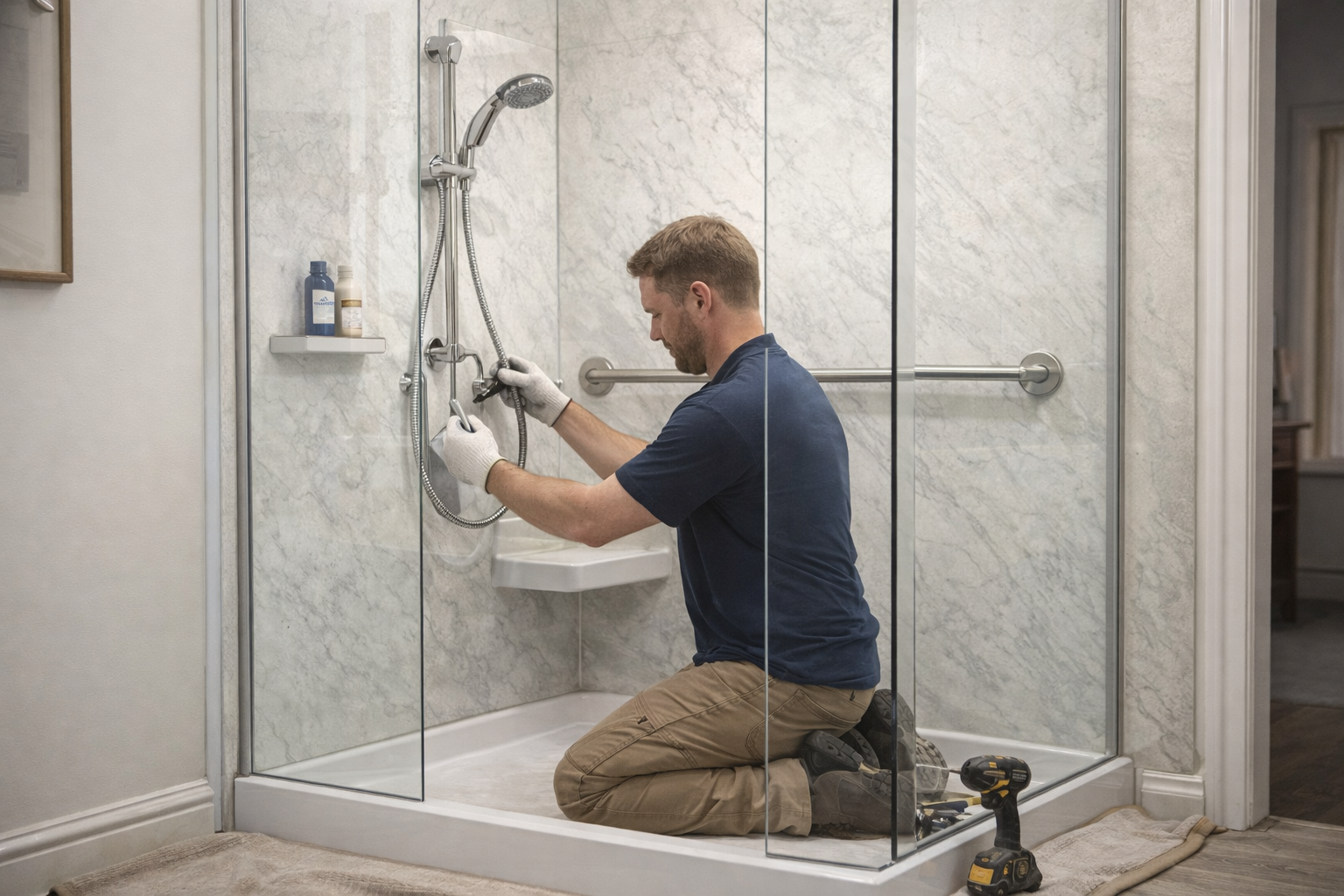
Yes — many tub-to-shower conversions in Connecticut can be completed in one to two days, particularly when acrylic or composite wall systems are used and existing conditions are favorable.
Projects most likely to be completed in 1–2 days:
Standard tub alcoves common in raised ranches, capes, and colonials
Acrylic or composite wall systems
Pre-manufactured shower bases
Minimal plumbing relocation
No hidden moisture or framing issues
Projects that often take longer:
Tile-based or custom systems
Older homes with water damage or outdated plumbing
Drain or valve relocation
Structural or subfloor repairs
In many Connecticut homes — especially those built before 1980 — conditions behind the walls are unknown until demolition begins.
Tub-to-Shower Conversions & Aging-in-Place in Connecticut
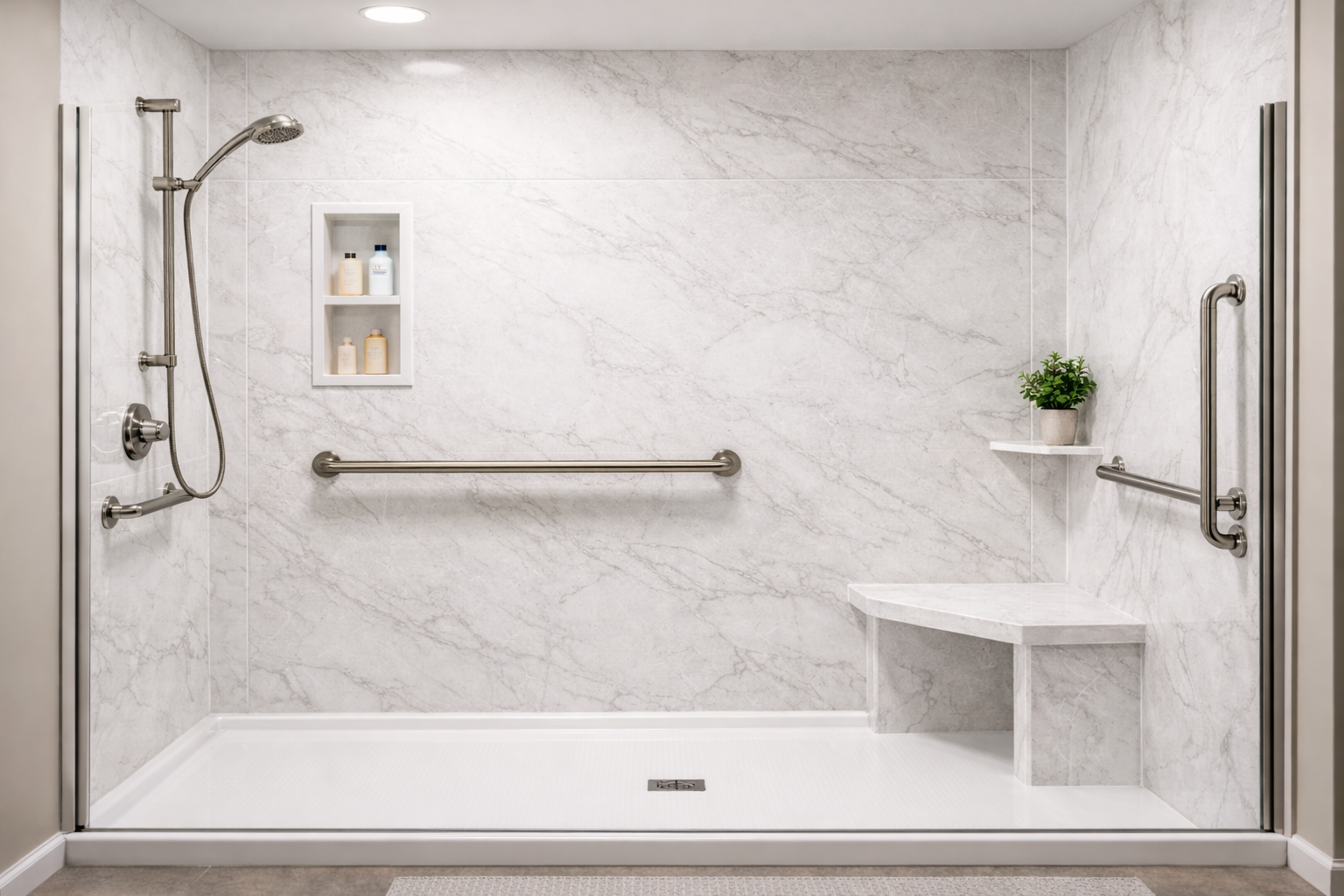
Marble-style acrylic walk-in shower with bench seating and grab bars, designed for aging-in-place and low-maintenance living in Connecticut homes.
Acrylic vs Tile Showers: What Works Best in Connecticut Homes?
Material choice has a major impact on timeline, maintenance, and long-term performance.
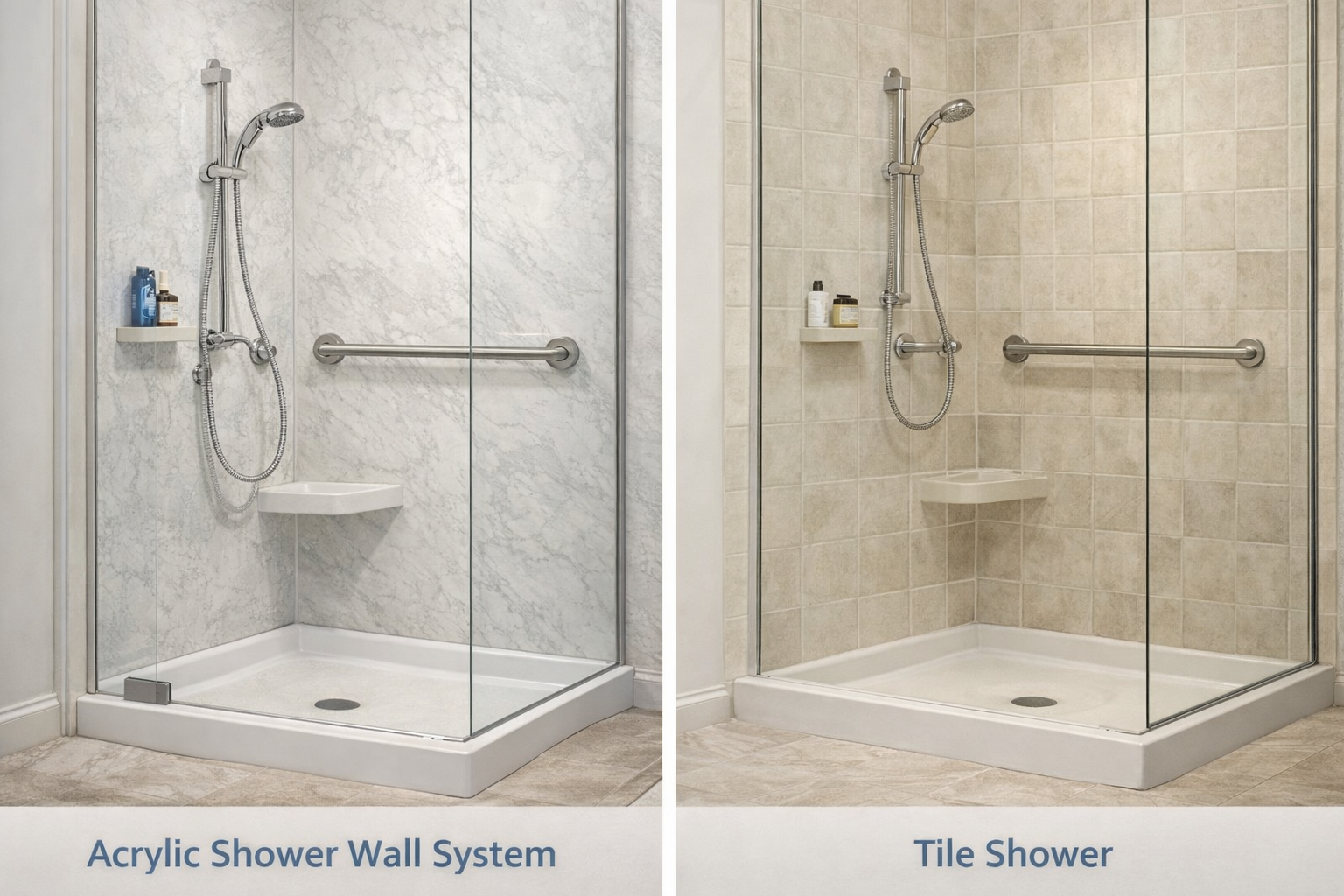
Acrylic & Composite Shower Systems
Acrylic systems are extremely common across Connecticut due to:
Faster installation timelines
Non-porous, mold-resistant surfaces
Easier long-term cleaning
Consistent waterproofing when properly installed
These systems are frequently used for efficiency-focused remodels and aging-in-place projects.
Tile & Custom Shower Systems
Tile showers offer design flexibility but typically involve:
Longer installation timelines
Higher labor costs
Greater dependence on waterproofing quality
Ongoing grout maintenance
Tile systems are often better suited for full custom remodels rather than quick conversions.
Across Connecticut, more homeowners are choosing to stay in their homes longer, making bathroom safety a priority rather than an afterthought.
Traditional bathtubs present common risks:
High step-over thresholds
Slippery surfaces
Limited balance support
Difficult entry and exit
A thoughtfully designed tub-to-shower conversion can significantly reduce fall risk while improving comfort and usability.
Key Safety Features Connecticut Homeowners Should Consider
Grab Bars (Not Just for Seniors)
Properly installed grab bars:
Support full body weight
Improve stability for all ages
Can be discreet and modern in appearance
Correct placement and anchoring matter more than style.
Slip-Resistant Shower Bases
Slip resistance is especially important in Connecticut due to:
Wet footwear from snow and rain
Seasonal humidity changes
Older flooring transitions
Threshold & Entry Design
Depending on framing and plumbing, options may include:
Low-profile thresholds
Wider entries
Benches or fold-down seating
True curbless showers are possible in some homes but depend heavily on structural conditions.
Controls & Fixtures
Safety-focused showers often include:
Handheld showerheads
Easy-to-reach controls
Pressure-balanced valves to prevent scalding
Typical Costs for Tub-to-Shower Conversions in Connecticut
Costs vary based on materials, home age, safety upgrades, and preparation work.
Rather than relying on national averages, Connecticut homeowners should understand regional pricing realities and what causes estimates to vary.
👉 Read next:
Cost Breakdown: Tub-to-Shower Conversions in Connecticut
Common Red Flags to Watch For
Homeowners should pause and ask questions if:
“One-day install” claims ignore wall conditions
Waterproofing methods are vague
Safety features are dismissed as unnecessary
Mold or water damage is brushed off
Pricing relies heavily on urgency or pressure
Quality conversions balance speed and durability.
Is a Tub-to-Shower Conversion Right for Your Connecticut Home?
Tub-to-shower conversions make sense for many Connecticut homeowners, especially those focused on:
Aging in place
Improving daily usability
Reducing fall risk
Updating older bathrooms efficiently
Homes with only one bathroom or specific resale goals may still benefit from keeping a tub. Context matters.
Final Thoughts
For many Connecticut homeowners, tub-to-shower conversions are less about trends and more about comfort, safety, and long-term livability. When designed thoughtfully — with appropriate materials, realistic timelines, and proper safety features — these projects can deliver lasting value.
This guide is intended to help homeowners make informed decisions without pressure.
If you’re researching tub-to-shower conversions and have general questions about materials, timelines, or safety considerations, you can ask a renovation question below.