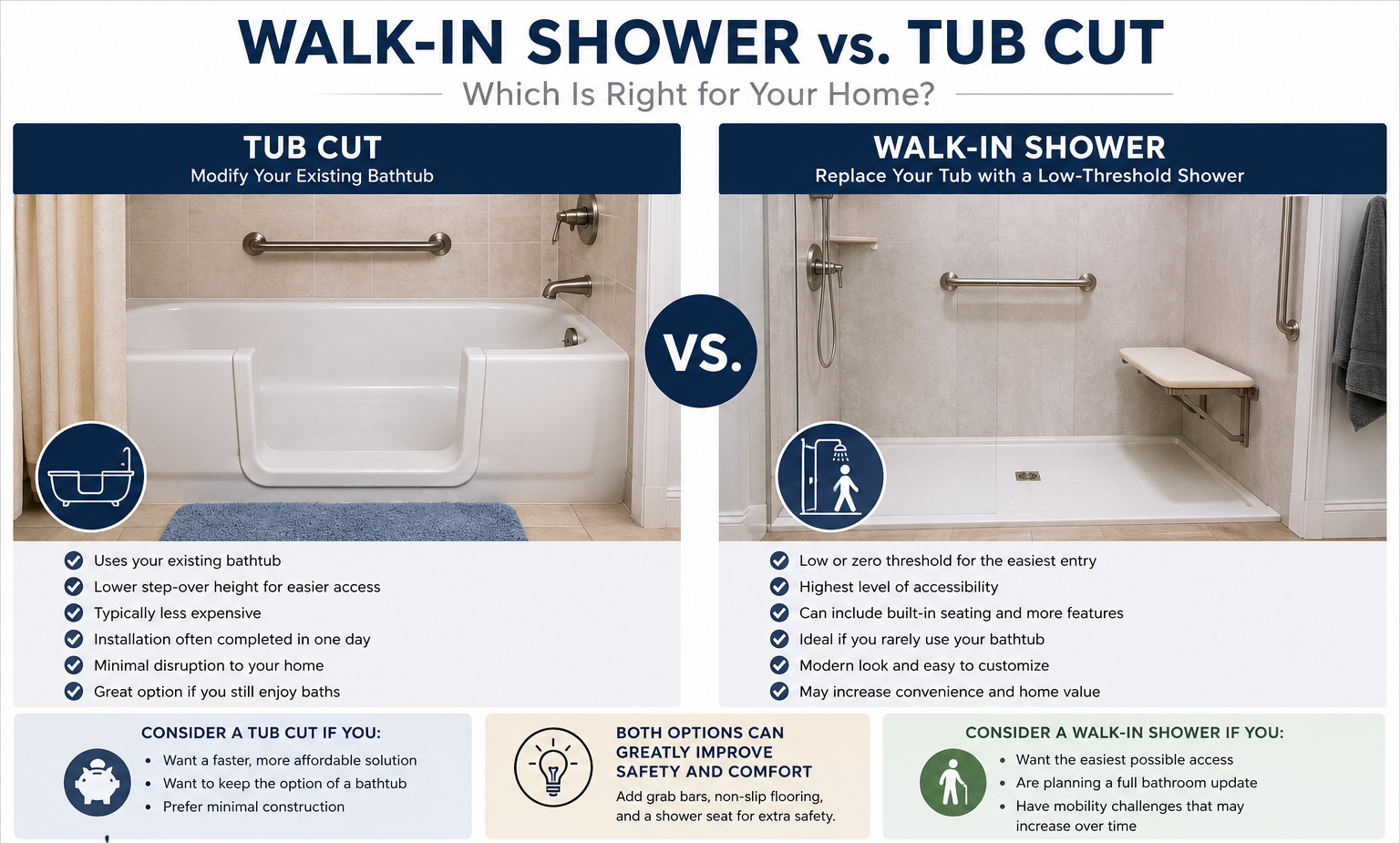
Walk-In Shower vs. Tub Cut: Which Is Right for Your Home?
Comparing Two Popular Bathroom Accessibility Solutions
If getting in and out of your bathtub has become difficult, you may be wondering whether a walk-in shower or a tub cut is the better solution. Both options can improve bathroom safety and accessibility, but they serve different needs, budgets, and long-term goals.
Understanding the advantages of each option can help you make the right decision for your home and lifestyle.
What Is a Tub Cut?
A tub cut modifies your existing bathtub by lowering a section of the front wall to create an easier step-through opening. Rather than removing the entire tub, a trained installer cuts an opening, reinforces the bathtub, and finishes it with a professionally designed insert.
A tub cut is often chosen by homeowners who want a safer bathroom without the expense and disruption of a complete renovation.
Advantages of a Tub Cut
Uses your existing bathtub.
Typically costs less than replacing the entire tub.
Installation is often completed in one day.
Minimal disruption to your home.
Lower step-over height improves safety.
A tub cut can also be combined with grab bars, handheld shower heads, and shower seating to create a much safer bathing environment.
What Is a Walk-In Shower?
A walk-in shower replaces the bathtub with a shower that has a low threshold or, in some cases, no threshold at all. Many walk-in showers include features such as built-in seating, grab bars, handheld shower heads, slip-resistant flooring, and easy-to-clean wall systems.
This option provides the highest level of accessibility and is often selected when a homeowner no longer uses a bathtub.
Advantages of a Walk-In Shower
Very easy to enter and exit.
Excellent accessibility for individuals with limited mobility.
Can accommodate mobility aids more easily.
Modern appearance that many homeowners prefer.
May increase convenience and comfort for everyday use.
Walk-in showers are especially popular for aging-in-place remodeling because they reduce many of the obstacles associated with traditional bathtubs.
Which Option Costs Less?
In most cases, a tub cut is the more economical option because it modifies your existing bathtub rather than replacing it.
A walk-in shower generally requires:
Removing the existing bathtub.
Plumbing adjustments.
New shower walls.
A new shower base.
Additional finishing work.
While a walk-in shower involves a larger investment, it may be the best long-term solution depending on your mobility needs and future plans.
Which Is Safer?
Both options improve bathroom safety, especially when paired with professionally installed grab bars and slip-resistant surfaces.
A tub cut reduces the height you must step over to enter the bathtub.
A walk-in shower removes the bathtub barrier almost entirely, making it the easier option for many individuals with significant mobility limitations.
The safest solution depends on your current physical abilities, medical needs, and whether you expect those needs to change over time.
Which Option Is Right for You?
A tub cut may be a good choice if you:
Want to improve safety without replacing your bathtub.
Need a lower-cost accessibility solution.
Want minimal construction.
Still prefer having a bathtub available.
A walk-in shower may be the better choice if you:
Rarely use your bathtub.
Want the easiest possible shower entry.
Are planning a complete bathroom update.
Need greater accessibility for long-term mobility.
Frequently Asked Questions
Can I add grab bars to either option?
Yes. Grab bars can be professionally installed with either a tub cut or a walk-in shower and are one of the most effective ways to improve bathroom safety.
Can a walk-in shower include a seat?
Absolutely. Many homeowners choose built-in or fold-down shower seats for added comfort and safety.
Which option adds more value to a home?
Every home is different. A modern walk-in shower is a popular feature for many buyers, while a professionally installed tub cut can provide a practical and cost-effective accessibility solution for homeowners who wish to remain in their homes.
Key Takeaways
A tub cut modifies your existing bathtub for easier access.
A walk-in shower replaces the bathtub with a low-threshold shower.
Tub cuts are often faster and more affordable.
Walk-in showers provide the highest level of accessibility.
The best choice depends on your mobility, budget, and long-term plans.
Serving Connecticut Homeowners
Choosing between a tub cut and a walk-in shower is an important decision. At New England Home Advisor, we believe homeowners should understand all of their options before beginning any bathroom accessibility project. Our goal is to provide straightforward information that helps you choose the solution that's right for your home, your budget, and your future.
Related Learning Center Articles
What Is a Tub Cut?
Bathroom Safety Checklist
Where Should Grab Bars Be Installed?
How Long Does a Tub Cut Take?
Aging in Place Bathroom Ideas